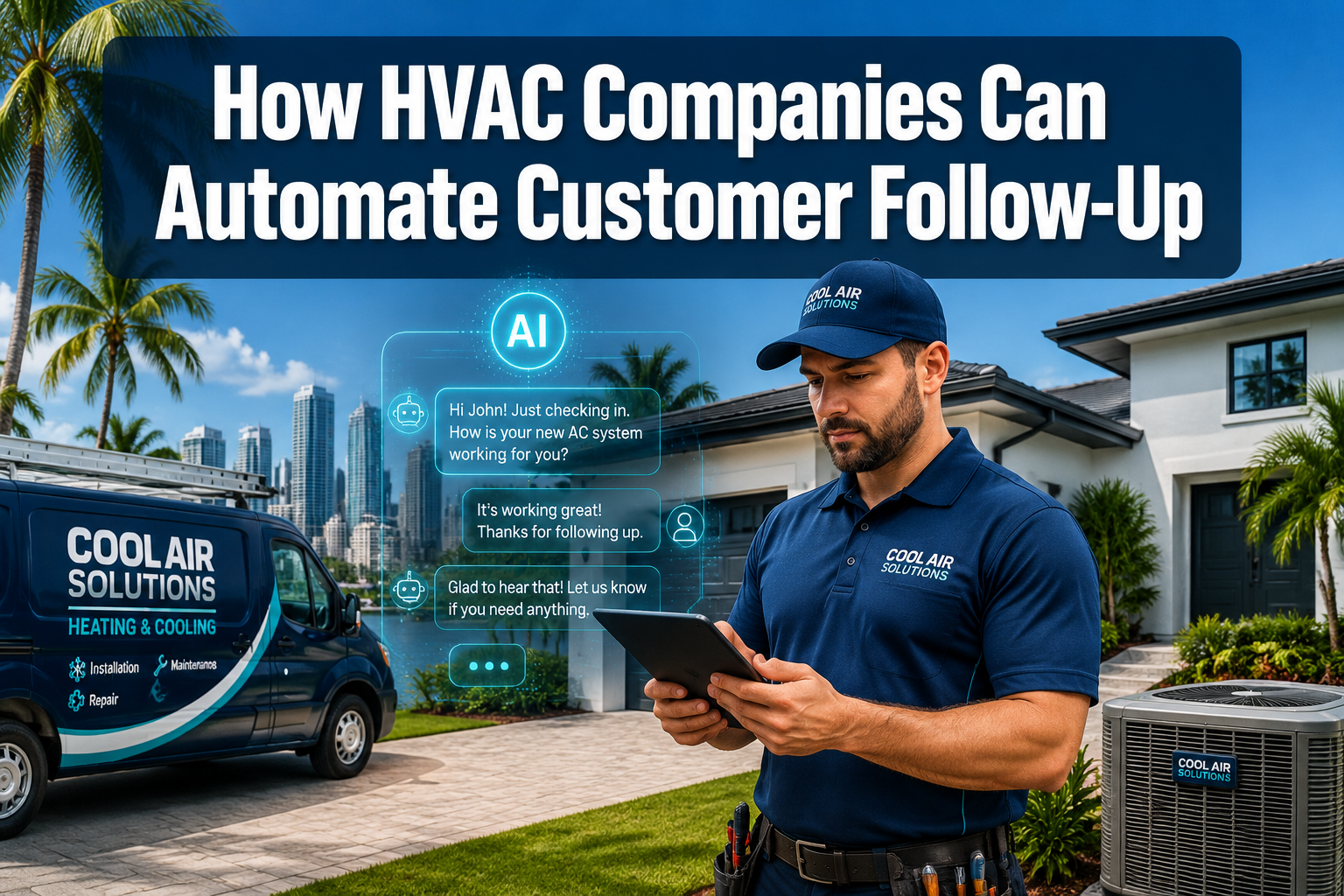
Why Most HVAC Companies Are Losing Leads Right Now
The problem is not marketing. It's what happens after the lead arrives.
An HVAC company in Doral runs Google Ads, gets 40 calls a week, and still ends the month wondering why the calendar isn't full. The answer is almost always the same: slow follow-up, missed calls after hours, and no system to re-engage leads who didn't book on the first contact.
The three biggest follow-up failures in HVAC:
- No response after hours — A homeowner's AC dies at 9 PM. They call. Nobody answers. They move on.
- Manual follow-up that never happens — A lead fills out a web form on Saturday. The office sees it Monday. The job is already booked with someone else.
- No nurture sequence — A lead gets one call attempt, no voicemail, no text, no email. Gone forever.
A Step-by-Step Automation System
Step 1: Capture Every Lead Automatically
Every inbound channel — phone calls, web forms, web chat, Facebook messages, Google Business messages — feeds into a single CRM. In Miami, many service requests come through Instagram and Facebook Messenger, especially from Spanish-speaking homeowners. Missing those channels means missing jobs.
Step 2: Respond in Under 5 Seconds
Speed-to-lead is the most important metric in HVAC follow-up. A lead who gets a response in under 5 seconds is dramatically more likely to book than one who waits 30 minutes.
Step 3: Qualify and Route the Lead
The AI conversation system asks the right questions — type of issue, emergency or scheduled, zip code, availability — then routes the lead to the correct calendar.
Step 4: Book the Appointment Automatically
Once qualified, the lead books directly onto the technician's calendar with SMS and email confirmation plus a 24-hour reminder.
Step 5: Automate the Follow-Up Sequence
| Day | Action | Channel |
|---|---|---|
| 0 | Instant response + booking link | SMS + Email |
| 2 | Follow-up: "Still need help with your AC?" | SMS |
| 4 | Value message: "3 signs your AC needs service" | |
| 7 | Final follow-up: "We're holding a spot for you" | SMS |
| 30 | Seasonal check-in |
Step 6: Request Reviews After Every Job
After a job closes, the system automatically sends a review request to Google or Facebook — timed 2 hours after the technician marks the job complete.
Manual vs. Automated Follow-Up
| Factor | Manual | Automated |
|---|---|---|
| Response time | 30 min – 24 hours | Under 5 seconds |
| After-hours coverage | None | 24/7 |
| Follow-up consistency | Depends on staff | 100% consistent |
| Lead tracking | Spreadsheets or memory | CRM pipeline |
| Review requests | Rarely sent | Automatic post-job |
Conclusion: Stop Leaking Leads
The companies winning in 2026 are the ones who respond first, follow up consistently, and never let a lead go cold. Start with missed call text-back — the single fastest win — then build a 5-touch follow-up sequence for every lead who doesn't book immediately.