SUGGESTED URL SLUG: the-hidden-mold-problem-in-florida-homes-how-to-catch-it-before-insurance-wont-cover-it
SEO TITLE: Hidden Mold in Florida Homes: Catch It Before Insurance Won't
META DESCRIPTION: Florida's humidity makes mold a year-round threat. Learn how to find hidden mold before your insurer denies the claim — with costs, red flags, and local pro tips.
The Hidden Mold Problem in Florida Homes: How to Catch It Before Insurance Won't Cover It
Updated May 2026 | Florida-specific | Reviewed by licensed contractors in our network
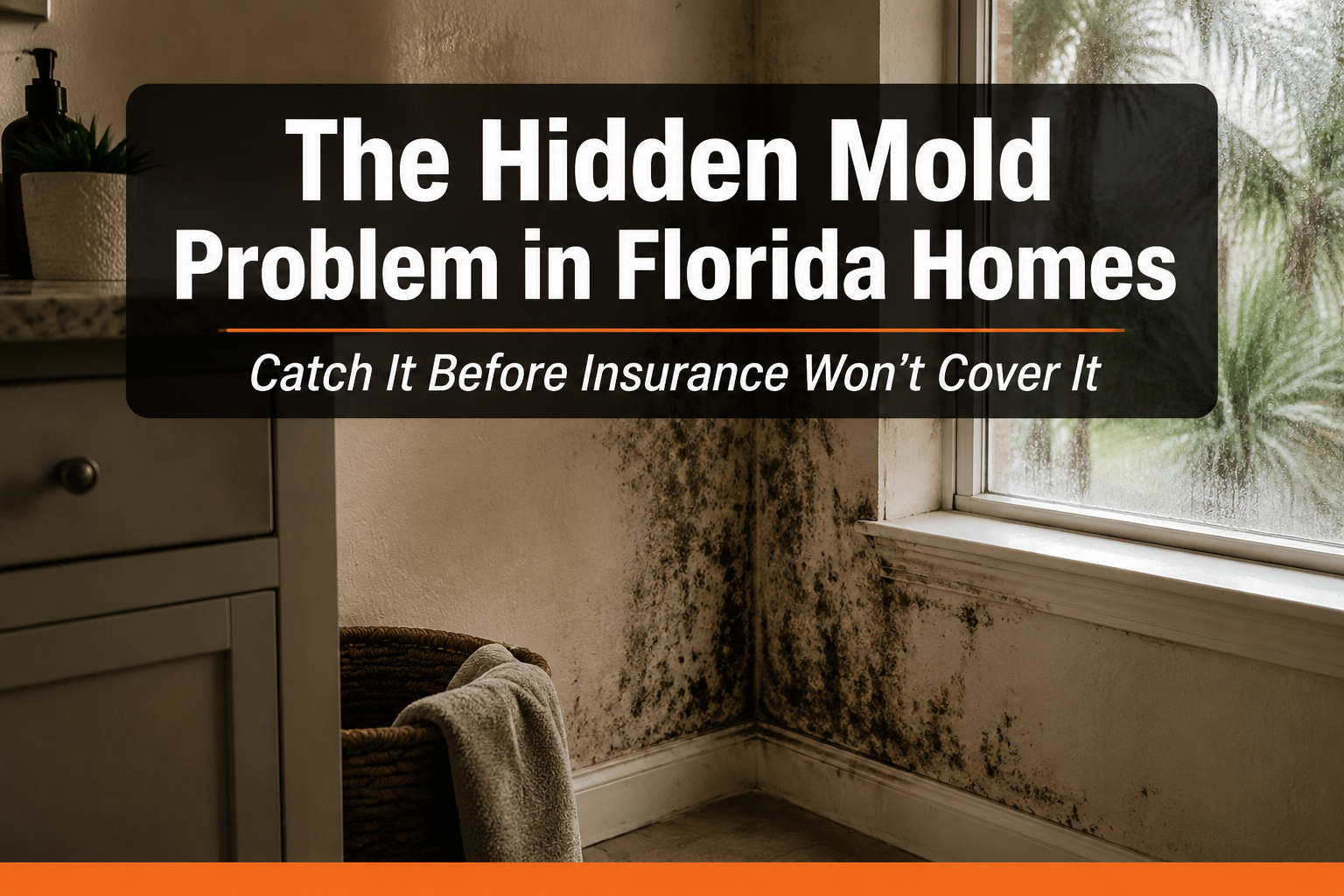
Florida has the second-highest mold claim denial rate in the country — and the most common reason insurers cite is "pre-existing condition." That phrase costs Florida homeowners an average of $15,000 to $30,000 out of pocket when remediation falls outside coverage. In a state where indoor humidity regularly sits above 70% and every hurricane season brings another round of water intrusion, mold isn't a possibility. It's a timeline.
The hidden mold problem in Florida homes is uniquely dangerous because the state's climate accelerates growth behind walls, under flooring, and inside HVAC systems — places you won't see until the damage is already expensive. By the time you smell it, your insurer may already have grounds to deny you.
The financial stakes are real and stacked. A denied mold claim means paying $15,000–$30,000 in remediation yourself. Undisclosed mold discovered during a home sale can collapse a deal — or trigger a lawsuit. And long-term mold exposure creates health risks that compound the longer it goes undetected.
FL Services Hub works with verified, licensed mold inspectors and remediation contractors across Tampa, Miami, Orlando, Jacksonville, Fort Lauderdale, and Naples. The perspective here comes from hundreds of conversations with Florida homeowners who caught mold early — and many who didn't. The difference between those two groups usually came down to one thing: knowing where to look before the problem became undeniable.
Here's what this guide covers:
- The specific Florida climate conditions that make mold a year-round threat — not just a post-hurricane problem
- A room-by-room inspection checklist you can use today
- What Florida insurance carriers actually look for when evaluating mold claims — and what triggers a denial
- Mold inspection and remediation costs broken down by city (Tampa, Miami, Orlando, Jacksonville, Naples)
- Red flags that disqualify a mold remediation contractor before you hire them
- The seasonal window when mold risk peaks — and when to schedule a professional inspection
- Answers to the most common questions Florida homeowners ask about mold coverage
If you'd rather skip the research and get matched with verified mold inspection pros in your area, you can do that in about 60 seconds — no obligation. Get Free Quotes from Florida Mold Pros →
What's in this guide:
- Why the Hidden Mold Problem in Florida Homes Is Different From Anywhere Else
- The Room-by-Room Mold Detection Checklist
- Mold Inspection and Remediation Costs by Florida City
- What Florida Insurance Carriers Actually Require for Mold Coverage
- Red Flags When Hiring a Mold Remediation Contractor in Florida
- The Seasonal Calendar: When to Act on Mold in Florida
- Frequently Asked Questions
- How to Get Verified Mold Inspection Quotes Through FL Services Hub
The facts above explain why this is urgent. What follows explains exactly what to do about it.
Why the Hidden Mold Problem in Florida Homes Is Different From Anywhere Else {#florida-context}
Florida's climate doesn't just encourage mold — it practically manufactures it. The Sunshine State averages over 54 inches of rainfall per year, and coastal cities like Miami and Fort Lauderdale regularly see indoor relative humidity climb above 60% even without a storm event. Mold begins colonizing porous materials at 55–60% relative humidity. That threshold is Florida's baseline, not its extreme.
Three climate factors stack against Florida homeowners specifically:
- Year-round warmth. Unlike northern states where mold slows in winter, Florida's average winter temperatures stay above 60°F — warm enough for mold to grow continuously without seasonal die-off.
- Hurricane-driven water intrusion. Even a Category 1 storm can drive water into wall cavities, attic spaces, and under flooring through gaps that look cosmetically intact. That moisture sits hidden for weeks before any visible sign appears.
- HVAC condensation. Florida air conditioning systems run nearly year-round. Condensation on ductwork, evaporator coils, and drain pans creates a perfect internal environment for mold — and most homeowners never inspect these components between annual tune-ups.
Florida's building stock adds another layer of risk. Homes built before 1980 — a significant portion of the housing stock in Tampa, St. Petersburg, and Jacksonville — often used paper-faced drywall and cellulose insulation that absorbs moisture readily. Newer construction isn't immune either: tight building envelopes trap humidity when HVAC systems underperform.
The insurance dimension makes this especially consequential. Florida's property insurance market has contracted sharply over the past several years, with multiple carriers exiting the state. The carriers that remain have tightened mold exclusions and added stricter documentation requirements. A mold problem that existed before your policy was written — or before you filed a claim — is almost always excluded. That's the trap. By the time mold is visible, it's often been growing for 30 to 90 days. Insurers know this, and they use it.
The hidden mold problem in Florida homes isn't just a health issue. It's a financial exposure that compounds the longer it goes undetected.
The Room-by-Room Mold Detection Checklist {#checklist}
Catching mold early means knowing where to look — not just reacting to what you can see or smell. This checklist covers the highest-risk zones in a typical Florida home. Work through it quarterly, and after any water event.
Bathrooms
- ✅ Check grout lines and caulk around the tub, shower, and toilet base for dark discoloration
- ✅ Inspect the underside of the vanity cabinet — especially around the supply lines and drain
- ✅ Look at the ceiling directly above the shower for soft spots or discoloration
- ✅ Test the exhaust fan: hold a tissue near the vent. If it doesn't pull, moisture is staying in the room
Kitchen
- ✅ Pull out the refrigerator and inspect the wall behind it — condensation from the coils is a common culprit
- ✅ Check under the sink around both the supply lines and the drain trap
- ✅ Inspect the dishwasher door gasket and the floor directly beneath the unit
- ✅ Look at the ceiling above the range hood if it vents into the attic
HVAC System
- ✅ Check the air handler drip pan for standing water or dark staining
- ✅ Look at accessible ductwork for visible condensation, rust, or soft spots in insulation wrap
- ✅ Smell the air from your vents when the system first kicks on — a musty odor on startup is a reliable early indicator
- ✅ Inspect the area around the air handler for water stains on the floor or wall
Attic
- ✅ Look for dark staining on the underside of the roof decking, particularly near ridge vents and around any penetrations (pipes, vents, skylights)
- ✅ Check insulation for compression or discoloration — wet insulation loses its loft
- ✅ Inspect the attic hatch itself for moisture staining
Exterior Walls and Windows
- ✅ Press on drywall near exterior windows — soft spots indicate moisture behind the surface
- ✅ Check window sills and the bottom of window frames for paint bubbling or dark spots
- ✅ Inspect baseboards along exterior walls, particularly on the north-facing side of the home where sun drying is minimal
Laundry Room
- ✅ Pull the washing machine away from the wall and inspect the supply hose connections
- ✅ Check the dryer vent duct — lint buildup traps moisture and creates an ideal mold environment
- ✅ Inspect the floor beneath and behind both units
One practical rule: if you find mold in more than two locations, or if any single affected area exceeds 10 square feet, call a licensed mold assessor before touching anything. Florida Statute 468.8411 requires mold assessors and remediators to hold separate licenses — a detail that matters enormously for insurance documentation.
Mold Inspection and Remediation Costs by Florida City {#costs}
Costs vary based on home size, mold extent, and the type of remediation required. The table below reflects typical ranges for 2026 across major Florida markets. These are estimates — your actual quote will depend on square footage, access difficulty, and whether structural materials need replacement.
| Service | Tampa | Miami | Orlando | Jacksonville | Naples |
|---|---|---|---|---|---|
| Mold Inspection (visual + air sampling) | $300–$550 | $350–$650 | $275–$500 | $250–$475 | $375–$700 |
| Small-area remediation (under 10 sq ft) | $500–$1,500 | $600–$1,800 | $450–$1,400 | $400–$1,200 | $600–$2,000 |
| Mid-size remediation (10–100 sq ft) | $1,500–$5,000 | $2,000–$6,500 | $1,400–$4,800 | $1,200–$4,500 | $2,000–$7,000 |
| Large remediation (100+ sq ft or structural) | $5,000–$20,000+ | $7,000–$25,000+ | $4,500–$18,000+ | $4,000–$15,000+ | $6,000–$22,000+ |
| Post-remediation clearance testing | $200–$400 | $250–$500 | $175–$375 | $150–$350 | $250–$450 |
Factors that push costs higher in Florida specifically:
- Salt air exposure (coastal homes in Miami, Naples, Fort Lauderdale) accelerates corrosion of HVAC components, creating secondary moisture pathways
- Slab construction — most Florida homes sit on concrete slabs, which means under-floor moisture issues require different remediation approaches than crawl-space homes
- Hurricane-related water intrusion typically affects multiple systems simultaneously, increasing scope
- Post-storm demand surges — after a named storm, remediation costs in affected areas can spike 30–50% due to contractor demand
One cost reality worth stating plainly: the inspection itself is not expensive relative to what it protects. A $400 inspection that catches a $15,000 remediation problem before your insurer can call it "pre-existing" is one of the better investments in Florida homeownership.
Want to compare prices for mold inspection in your city? Get 3 free quotes from verified Florida mold pros →
What Florida Insurance Carriers Actually Require for Mold Coverage {#insurance}
The hidden mold problem in Florida homes becomes a financial crisis specifically when insurance denies the claim. Understanding what carriers look for — and what triggers exclusions — is the most practical thing a Florida homeowner can know.
Florida's standard homeowners policies treat mold in one of three ways:
- Covered if caused by a sudden, accidental covered peril — for example, a pipe bursts, floods a bathroom, and mold develops within the remediation window. If you report promptly and document properly, this is typically covered.
- Excluded if caused by long-term moisture or neglect — slow leaks, chronic condensation, or deferred maintenance. This is where most claims are denied.
- Covered under a mold endorsement — some carriers offer optional mold coverage riders for an additional premium. These have their own sub-limits, often $10,000–$25,000.
What triggers a denial:
- Evidence that the mold predates the reported incident (adjusters look at growth patterns and laboratory testing)
- Failure to mitigate after discovering water damage — Florida law and most policies require you to take reasonable steps to prevent further damage
- No documentation of the original water event (date, cause, photos)
- Mold discovered during a routine inspection or home sale, with no associated covered peril
What helps a claim succeed:
- Immediate documentation. Photograph water damage the day it occurs, before any cleanup. Note the date and cause.
- Licensed assessment. A report from a Florida-licensed mold assessor (license prefix: MRSA) carries more weight than a general contractor's opinion.
- Prompt remediation. Most policies require you to begin mitigation within 24–72 hours of discovering water damage. Waiting weakens your position.
- Clearance testing. Post-remediation air quality testing creates a documented record that the problem was resolved — useful if you ever sell the home or file a future claim.
One important note: nothing in this guide constitutes insurance advice, and policy language varies significantly between carriers. Review your specific policy and consult your agent about mold endorsement options — especially if your home is in a high-humidity coastal area like Sarasota, Naples, or Fort Lauderdale.
For expert home improvement services in South Florida that intersect with mold prevention — including plumbing repairs, HVAC maintenance, and waterproofing — verified pros are available across all major Florida markets.
Red Flags When Hiring a Mold Remediation Contractor in Florida {#red-flags}
Florida's mold remediation industry has a documented problem with unlicensed operators — particularly after storm events when demand spikes and homeowners are desperate. Hiring the wrong contractor doesn't just waste money. It can invalidate your insurance claim and leave the mold problem intact beneath new drywall.
These are the red flags that should end the conversation immediately:
1. No separate mold assessor and remediator
Florida law prohibits the same company from both assessing and remediating mold on the same project (with limited exceptions). If a contractor offers to "inspect and fix it in one visit" without involving a separate licensed assessor, walk away.
2. No Florida mold license
Mold assessors need a license beginning with MRSA; remediators need MRSR. Verify both at the Florida Department of Business and Professional Regulation (DBPR) website before signing anything. License verification takes 60 seconds and is free.
3. Pressure to sign before testing
A legitimate contractor won't push you to authorize remediation before air sampling results come back. If someone is urging you to "start immediately" before you have test data, that's a sales tactic — not a safety concern.
4. No written scope of work
Every remediation job should include a written protocol based on the assessor's findings. Verbal agreements and vague "mold removal" invoices create problems if you need to document the work for insurance or a future home sale.
5. Unusually low bids
Mold remediation requires containment, negative air pressure, HEPA filtration, and proper disposal. If a bid is 40–50% below others you've received, the contractor is almost certainly skipping required steps.
6. No post-remediation clearance testing
Legitimate remediation ends with independent air quality testing to confirm the problem is resolved. A contractor who discourages clearance testing has a reason for doing so.
7. Storm-chaser solicitation
After any named storm affecting Tampa Bay, South Florida, or the Space Coast, unlicensed operators flood affected neighborhoods. If someone knocked on your door within 48 hours of a storm and offered mold services, verify their license before proceeding.
For licensed and insured home service pros across Florida, FL Services Hub manually reviews every listing in the directory — so you're not starting from scratch when you need to verify credentials.
The Seasonal Calendar: When to Act on Mold in Florida {#seasonal}
Florida doesn't have a "mold season" the way northern states have a "cold season." But risk does peak at specific points in the year, and timing your inspections around those peaks is the smartest approach.
June through September — Highest Risk
Florida's summer rainy season runs June through September, overlapping almost exactly with hurricane season (June 1 – November 30). This is when water intrusion events are most likely, humidity is highest, and mold growth is fastest. Schedule a professional inspection in late May — before the season begins — so you have a clean baseline and any existing issues are documented before storm risk peaks.
October through November — Post-Storm Assessment Window
After any named storm or significant flooding event, schedule a mold inspection within 2–3 weeks. Mold can begin colonizing within 24–48 hours of water intrusion, but visible signs may not appear for 3–6 weeks. Waiting until you see or smell something means the colony is already established.
February through March — Annual Maintenance Window
Florida's dry season (roughly December–April) is the best time for proactive HVAC maintenance, since the system has been running hard for months. An HVAC inspection in February or March often catches condensate drain issues, coil contamination, and duct moisture before summer demand returns. Expert HVAC services in South Florida can address these issues as part of a standard tune-up.
Before Any Real Estate Transaction
Whether you're buying or selling, a mold inspection should be non-negotiable in Florida. Sellers who discover and remediate mold before listing avoid disclosure complications. Buyers who skip mold inspection in the rush of a competitive market are taking a risk that can cost tens of thousands of dollars post-closing.
The practical calendar for most Florida homeowners:
- May: Pre-season professional inspection + HVAC check
- After any storm or flooding event: Inspection within 2–3 weeks
- February: HVAC maintenance + visual self-inspection using the checklist above
- Before listing or purchasing: Independent mold assessment, always
Frequently Asked Questions {#faq}
Q: Does Florida homeowners insurance cover mold removal?
Standard Florida homeowners policies cover mold only when it results directly from a sudden, accidental covered peril — like a burst pipe. Mold from slow leaks, humidity, or deferred maintenance is typically excluded. Some carriers offer mold endorsements with sub-limits of $10,000–$25,000. Review your policy and ask your agent about available riders.
Q: How long does mold take to grow after water damage in Florida?
Mold can begin colonizing porous materials within 24–48 hours of water exposure in Florida's climate. Visible growth typically appears within 3–21 days, depending on temperature, humidity, and the material involved. This is why prompt documentation and mitigation after any water event is critical for insurance purposes.
Q: What's the difference between a mold inspection and mold testing?
A mold inspection is a visual assessment of your home for signs of moisture intrusion and mold growth. Mold testing involves collecting air or surface samples and sending them to a laboratory to identify mold species and spore counts. In Florida, a thorough assessment typically includes both. Inspection alone won't satisfy most insurance documentation requirements.
Q: Can I remove mold myself in Florida?
For small, isolated areas under 10 square feet on non-porous surfaces, DIY removal with appropriate protective equipment is generally feasible. However, if you're dealing with mold in wall cavities, HVAC systems, or areas larger than 10 square feet, Florida guidelines recommend professional remediation — and DIY work won't produce the documentation needed for insurance claims or real estate transactions.
Q: How do I verify a mold contractor's license in Florida?
Visit the Florida Department of Business and Professional Regulation (DBPR) website at myfloridalicense.com and search by license number or company name. Mold assessors hold MRSA licenses; remediators hold MRSR licenses. This search is free and takes under a minute. Never hire a mold contractor without completing this step.
Q: What does mold remediation actually involve?
Professional remediation includes: containing the affected area with plastic sheeting and negative air pressure to prevent spore spread; removing contaminated materials (drywall, insulation, flooring); treating structural surfaces with EPA-registered antimicrobial agents; and post-remediation clearance testing by an independent assessor. The process for a mid-size remediation typically takes 3–7 days.
Q: Will mold affect my home's resale value in Florida?
Undisclosed mold discovered after closing can result in litigation. Disclosed mold that has been professionally remediated with documentation typically has a limited impact on value — buyers are more concerned about current conditions than past issues that were properly addressed. A clearance report from a licensed assessor is your best protection in a real estate transaction.
Q: How often should Florida homeowners schedule a professional mold inspection?
Most licensed inspectors recommend annually for homes in high-humidity coastal areas (Miami, Naples, Fort Lauderdale, Sarasota) and every 1–2 years for inland properties (Orlando, Jacksonville). After any storm, flooding, or plumbing failure, schedule an inspection regardless of when the last one occurred.
How to Get Verified Mold Inspection Quotes Through FL Services Hub {#cta}
Finding a licensed mold inspector or remediator in Florida shouldn't require an hour of Google searches and license verification on three different websites. FL Services Hub is a verified directory of trusted home service professionals across Tampa, Miami, Orlando, Jacksonville, Fort Lauderdale, Naples, and Sarasota — and every listing is manually reviewed before it goes live.
That means when you request a quote through the directory, you're connecting with contractors who are:
- Licensed and insured in the state of Florida
- Verified — not just self-reported
- Local — serving your specific city and county, not a national call center routing your request to whoever bids lowest on the lead
The process is straightforward. Submit your request, describe what you're dealing with (or what you want inspected proactively), and get matched with up to three verified pros in your area. No obligation, no pressure, no sharing your contact information with 12 contractors you never wanted to hear from.
For reliable plumbing services in Florida that address the root causes of mold — leaking pipes, failed supply lines, drain backups — verified pros are also available through the same directory. Mold and plumbing problems are often the same problem at different stages.
The hidden mold problem in Florida homes is solvable. The homeowners who avoid the $15,000–$30,000 out-of-pocket remediation bill are the ones who inspect proactively, document everything, and hire licensed professionals before the problem becomes undeniable.
Get Free Quotes from Verified Florida Mold Inspection Pros →
Conclusion: The Window to Act Is Shorter Than You Think
Florida's humidity doesn't wait, and neither do insurance exclusions. The hidden mold problem in Florida homes is most costly when it's discovered late — after it's grown large enough to see, after a claim has been filed without proper documentation, or after a home sale falls apart over an undisclosed inspection finding.
The practical steps are clear: run through the room-by-room checklist today, schedule a professional inspection before hurricane season peaks in August, and verify any contractor's MRSA or MRSR license before signing anything. If you find something, document it immediately and call a licensed assessor — not a remediator — first.
Your next step: connect with a verified Florida mold inspection pro through FL Services Hub and get a quote in your city. It costs less than you think, and it costs far less than the alternative.
References
- Florida Department of Business and Professional Regulation (DBPR). Mold-Related Services Licensing. myfloridalicense.com. (Accessed 2024)
- Florida Statute § 468.8411 — Mold-Related Services. leg.state.fl.us. (2021)
- U.S. Environmental Protection Agency. A Brief Guide to Mold, Moisture and Your Home. epa.gov. (2012)
- Insurance Information Institute. Homeowners Insurance: What You Need to Know. iii.org. (2023)
- NOAA National Centers for Environmental Information. Florida Climate Normals. ncei.noaa.gov. (2021)
Tags: mold inspection Florida, Florida mold remediation, hidden mold Florida homes, Florida homeowners insurance mold, mold after hurricane, mold removal cost Florida, HVAC mold Florida, Tampa mold inspection, Miami mold remediation, Florida mold contractor, mold insurance claim denied, Florida home maintenance
<script type="application/ld+json">
{
  "@context": "https://schema.org",
  "@type": "FAQPage",
  "mainEntity": [
    {
      "@type": "Question",
      "name": "Does Florida homeowners insurance cover mold removal?",
      "acceptedAnswer": {
        "@type": "Answer",
        "text": "Standard Florida homeowners policies cover mold only when it results directly from a sudden, accidental covered peril — like a burst pipe. Mold from slow leaks, humidity, or deferred maintenance is typically excluded. Some carriers offer mold endorsements with sub-limits of $10,000–$25,000. Review your policy and ask your agent about available riders."
      }
    },
    {
      "@type": "Question",
      "name": "How long does mold take to grow after water damage in Florida?",
      "acceptedAnswer": {
        "@type": "Answer",
        "text": "Mold can begin colonizing porous materials within 24–48 hours of water exposure in Florida's climate. Visible growth typically appears within 3–21 days, depending on temperature, humidity, and the material involved. This is why prompt documentation and mitigation after any water event is critical for insurance purposes."
      }
    },
    {
      "@type": "Question",
      "name": "What's the difference between a mold inspection and mold testing?",
      "acceptedAnswer": {
        "@type": "Answer",
        "text": "A mold inspection is a visual assessment of your home for signs of moisture intrusion and mold growth. Mold testing involves collecting air or surface samples and sending them to a laboratory to identify mold species and spore counts. In Florida, a thorough assessment typically includes both. Inspection alone won't satisfy most insurance documentation requirements."
      }
    },
    {
      "@type": "Question",
      "name": "Can I remove mold myself in Florida?",
      "acceptedAnswer": {
        "@type": "Answer",
        "text": "For small, isolated areas under 10 square feet on non-porous surfaces, DIY removal with appropriate protective equipment is generally feasible. However, if you're dealing with mold in wall cavities, HVAC systems, or areas larger than 10 square feet, Florida guidelines recommend professional remediation — and DIY work won't produce the documentation needed for insurance claims or real estate transactions."
      }
    },
    {
      "@type": "Question",
      "name": "How do I verify a mold contractor's license in Florida?",
      "acceptedAnswer": {
        "@type": "Answer",
        "text": "Visit the Florida Department of Business and Professional Regulation (DBPR) website at myfloridalicense.com and search by license number or company name. Mold assessors hold MRSA licenses; remediators hold MRSR licenses. This search is free and takes under a minute. Never hire a mold contractor without completing this step."
      }
    },
    {
      "@type": "Question",
      "name": "What does mold remediation actually involve?",
      "acceptedAnswer": {
        "@type": "Answer",
        "text": "Professional remediation includes: containing the affected area with plastic sheeting and negative air pressure to prevent spore spread; removing contaminated materials (drywall, insulation, flooring); treating structural surfaces with EPA-registered antimicrobial agents; and post-remediation clearance testing by an independent assessor. The process for a mid-size remediation typically takes 3–7 days."
      }
    },
    {
      "@type": "Question",
      "name": "Will mold affect my home's resale value in Florida?",
      "acceptedAnswer": {
        "@type": "Answer",
        "text": "Undisclosed mold discovered after closing can result in litigation. Disclosed mold that has been professionally remediated with documentation typically has a limited impact on value — buyers are more concerned about current conditions than past issues that were properly addressed. A clearance report from a licensed assessor is your best protection in a real estate transaction."
      }
    },
    {
      "@type": "Question",
      "name": "How often should Florida homeowners schedule a professional mold inspection?",
      "acceptedAnswer": {
        "@type": "Answer",
        "text": "Most licensed inspectors recommend annually for homes in high-humidity coastal areas (Miami, Naples, Fort Lauderdale, Sarasota) and every 1–2 years for inland properties (Orlando, Jacksonville). After any storm, flooding, or plumbing failure, schedule an inspection regardless of when the last one occurred."
      }
    }
  ]
}
</script>